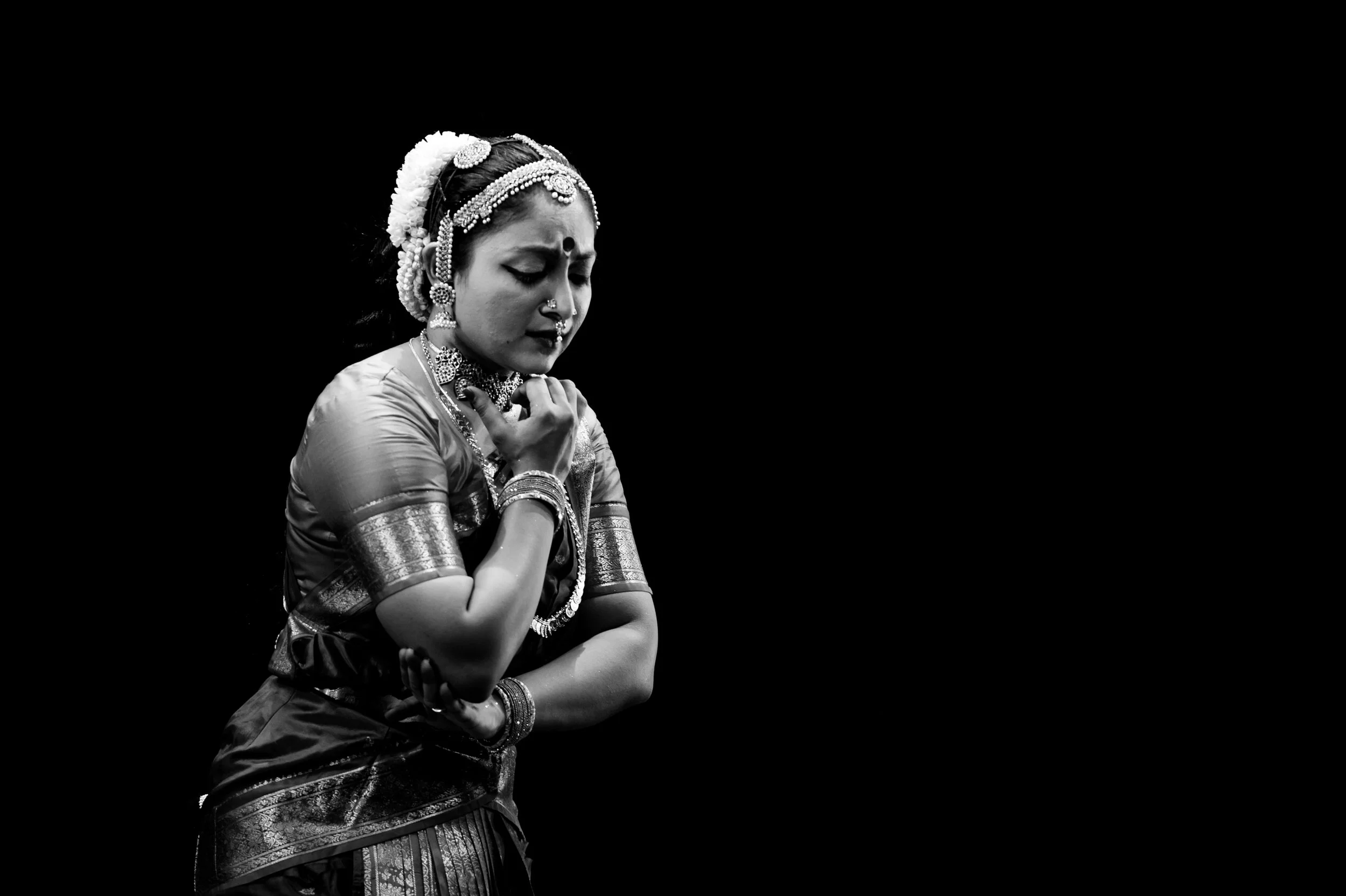
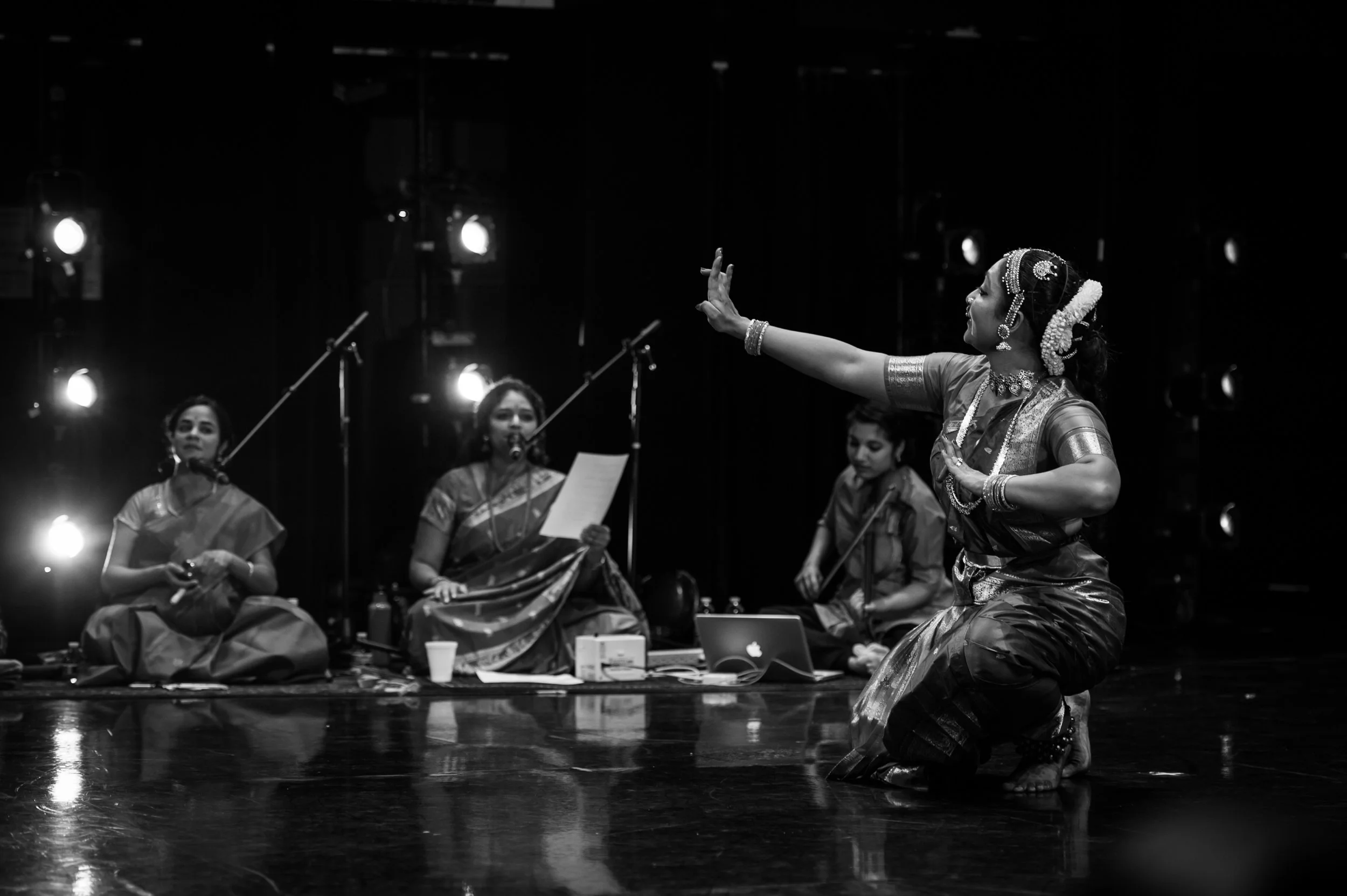
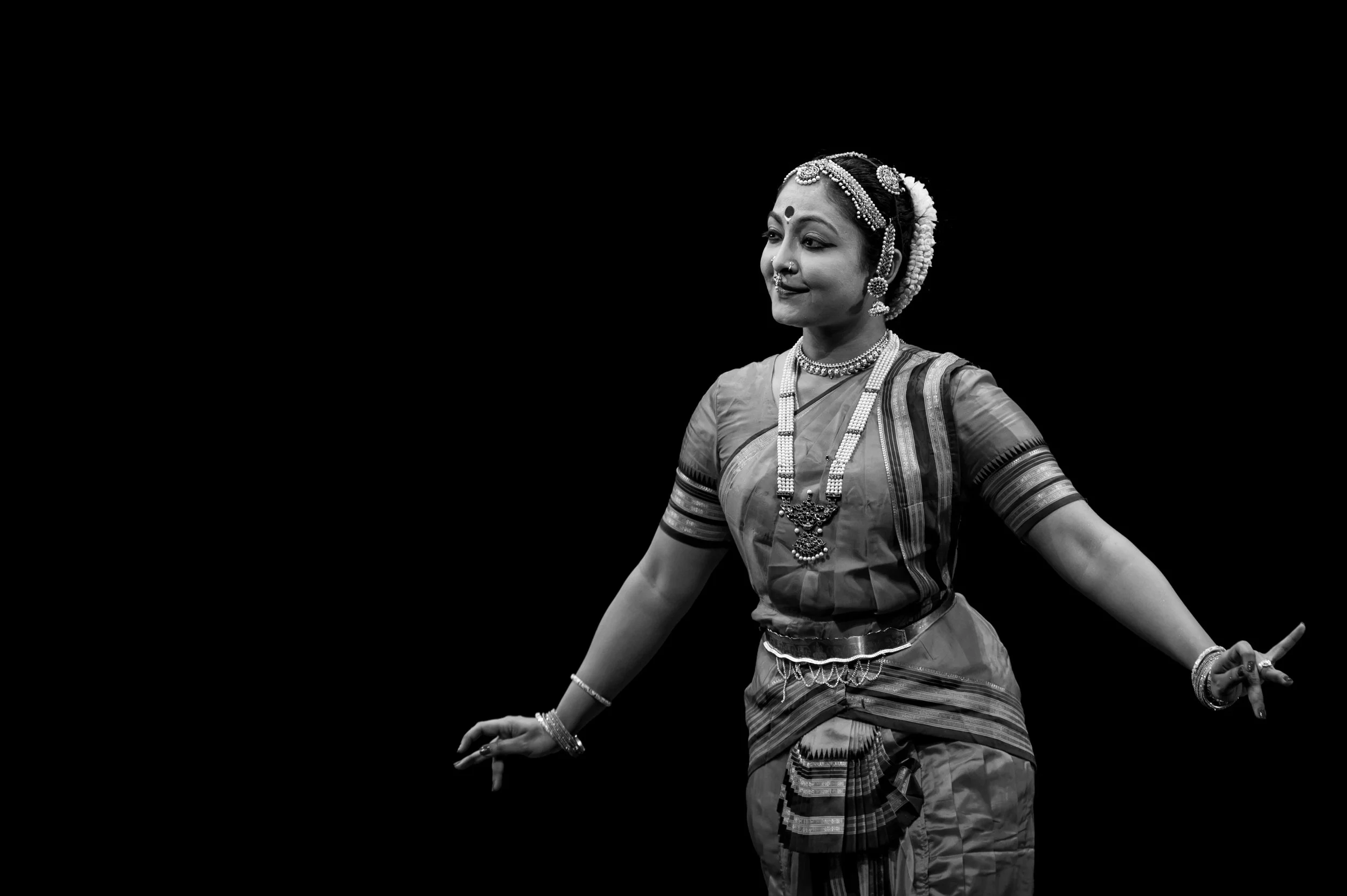
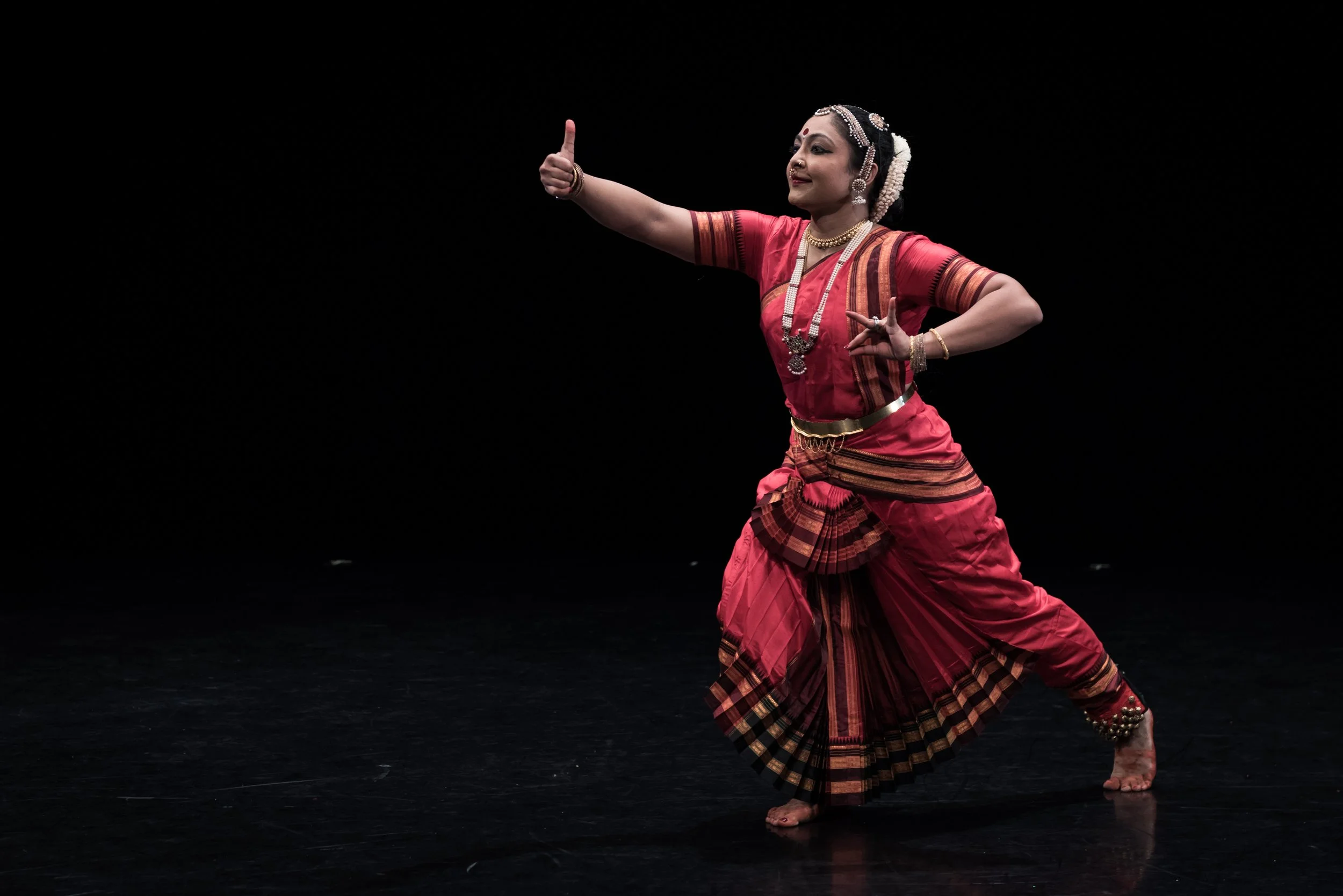
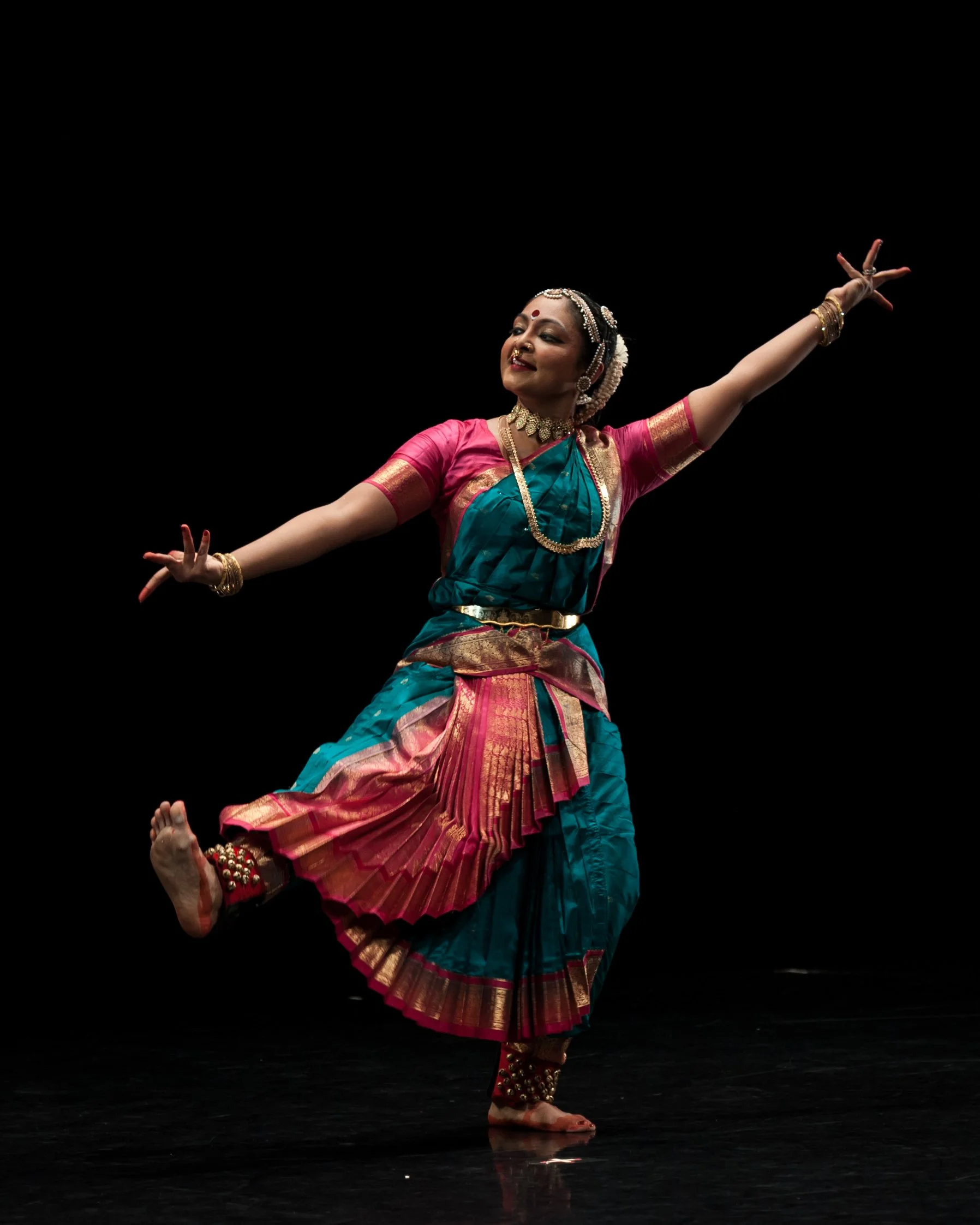
BharatanatyamBharatanatyam is one of the oldest surviving classical dance traditions of India, with roots in the temples of Tamil Nadu and aesthetic principles described in the ancient Nāṭya Śāstra. For centuries, it was performed by devadāsīs as part of temple worship and cultural life, while hereditary dance masters, or nattuvanars, preserved and transmitted its repertoire. Under the patronage of South Indian kingdoms, particularly the Cholas and later the Maratha rulers of Thanjavur, the dance developed into a highly refined artistic tradition. In the early nineteenth century, the Tanjore Quartet codified the modern margam, the performance structure that remains the foundation of Bharatanatyam recitals today. During the British colonial period, the anti-nautch movement and changing social attitudes led to the decline of the hereditary dance tradition. In the 1930s, Bharatanatyam was revitalized through the efforts of artists, scholars, and cultural leaders, including Rukmini Devi Arundale and Balasaraswati, who helped secure its place on the concert stage while preserving different aspects of its heritage. Following India’s independence, Bharatanatyam spread internationally through touring artists and waves of Indian migration. Today, it is practiced and performed across the world by artists who uphold its rigorous technique while exploring contemporary themes and cross-cultural collaborations. Bharatanatyam continues to evolve as a living tradition, balancing deep respect for its history with creative expression that speaks to present-day audiences. Its enduring power lies in its ability to unite rhythm, music, storytelling, and spirituality through a richly codified movement vocabulary.
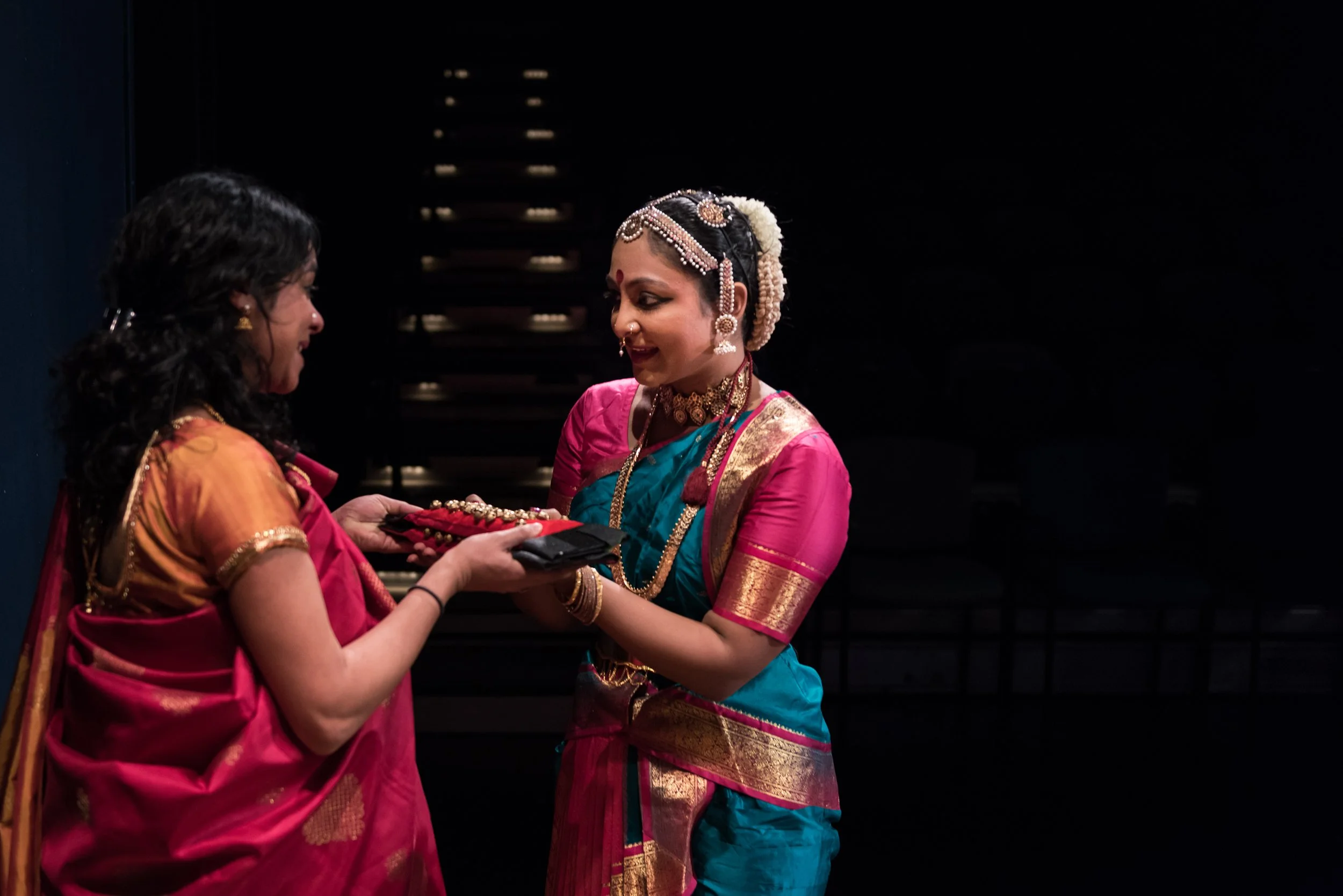
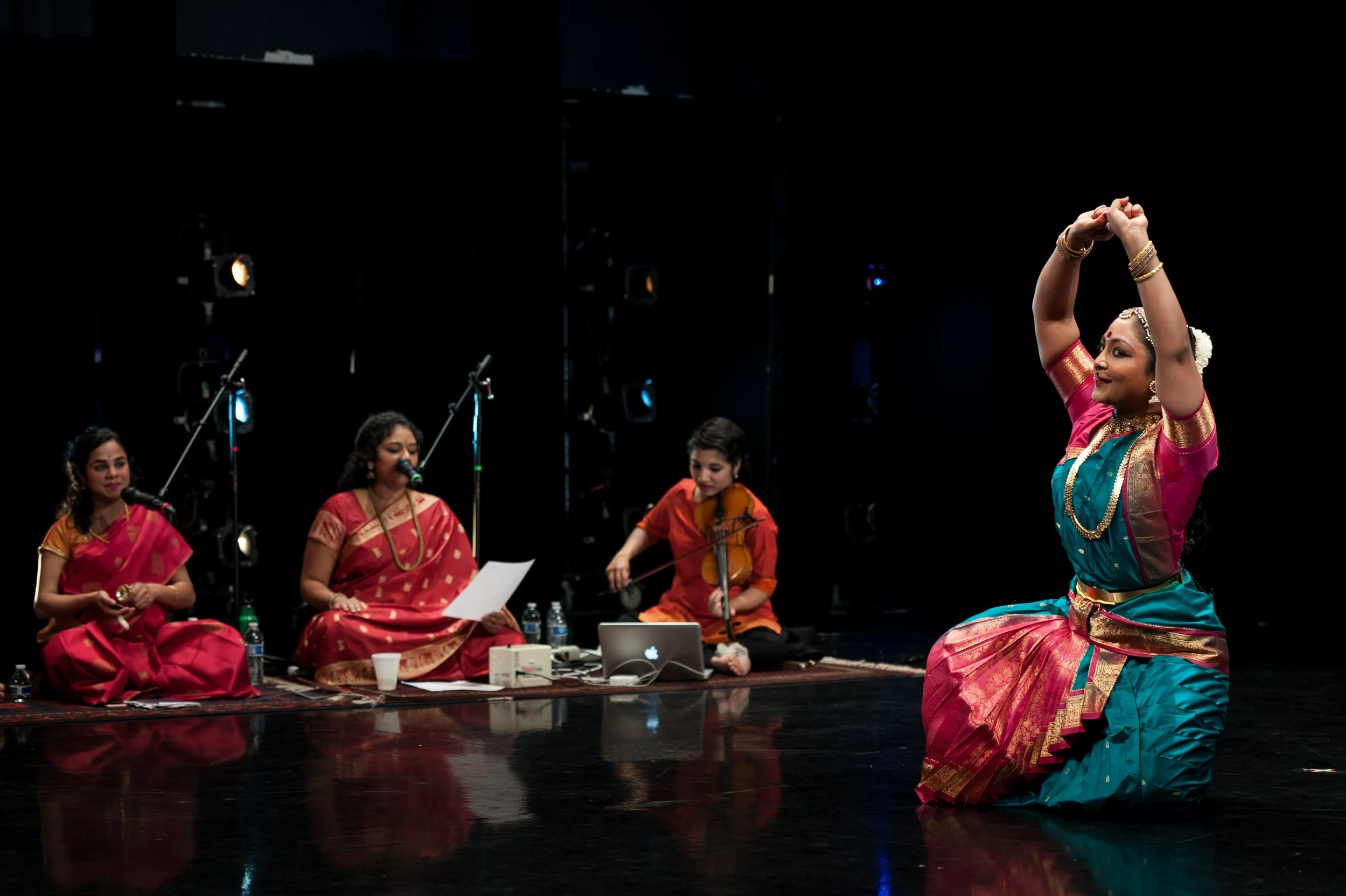
LineageKadhambari Sridhar’s artistic lineage is rooted in the Kalakshetra tradition of Bharatanatyam founded by Rukmini Devi Arundale. She began her formal training in Bharatanatyam in 2007 under her guru, Malini Srinivasan, Artistic Director of Gitanjali Dance School in New York and a disciple of the legendary Guru C. V. Chandrasekhar. Through this lineage, Kadhambari inherits a style known for its precision, musicality, expressive storytelling, and commitment to the classical margamrepertoire while embracing thoughtful contemporary choreography. Prior to Bharatanatyam, she trained in Kuchipudi under Guru Shailaja Prasad in Hyderabad, India, providing a strong foundation in South Indian classical dance. Since 2008, she has been a performing member of Malini Srinivasan and Dancers, presenting original works and traditional repertoire across the United States and internationally. Her practice reflects the continuity of the guru–shishya tradition while contributing to the evolving landscape of Bharatanatyam in the Indian diaspora.
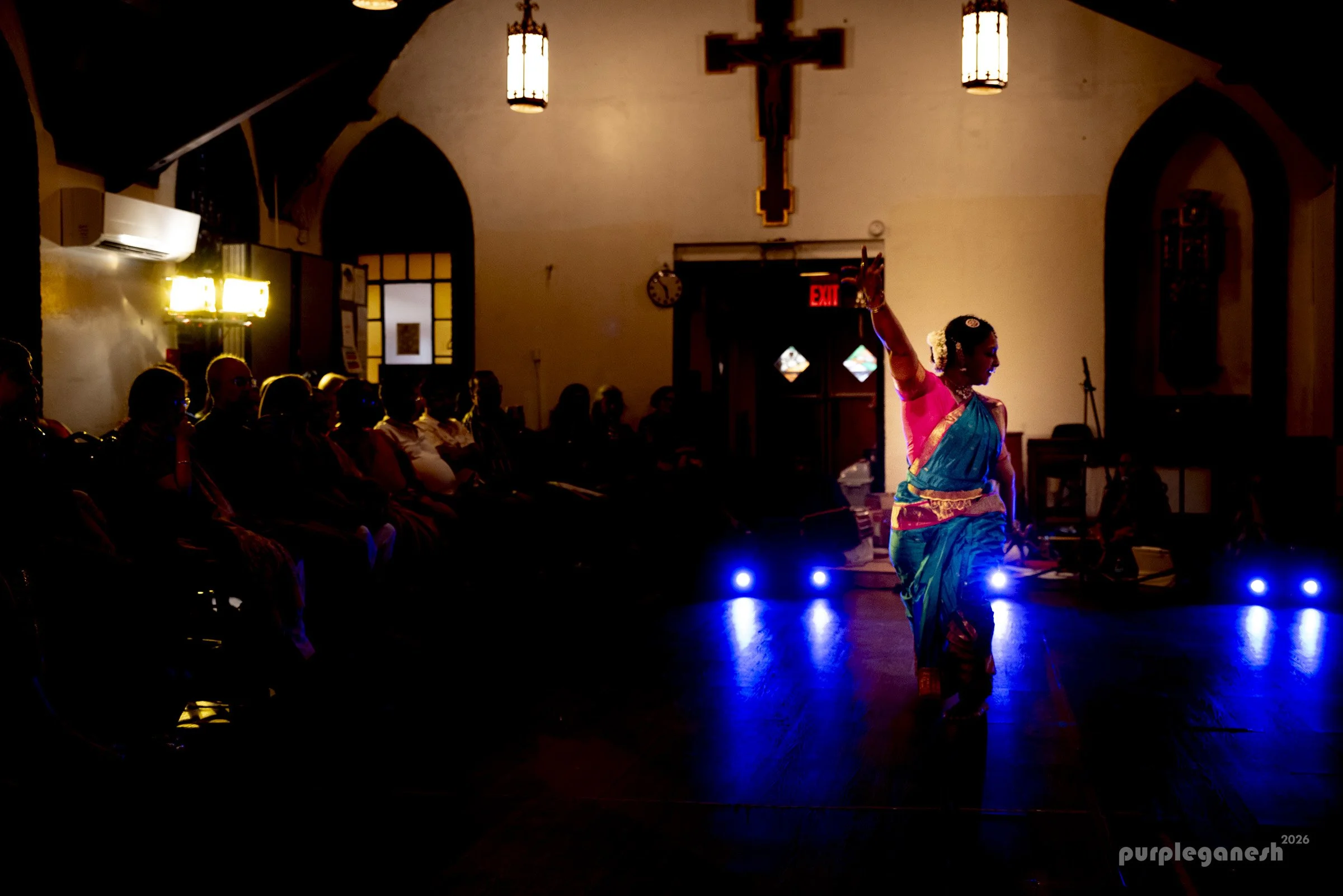
performancesRECENT SHOWS
June 20, 2026 Solo and group works, Gitanjali Recital and Reunion, Queens, NY
May 21, 2026 Group presentation for NYC Public Schools, New York, NY
May 16, 2026 Solo at Fiesta Asia, Central Stage for Asian Heritage Month, Washington, D.C.
February 8, 2026 Solo showcase, Gitanjali Dance School, Queens, NY
October 19, 2025 Solo presentation, Democratic Asian Americans of Virginia Diwali, Fairfax, VA
September 19, 2025 Solo presentation, Keshavam Garba celebration, Washington, D.C.
August 15, 2025 Battery Dance Festival, Malini Srinivasan and Dancers, New York, NY
2007 — 2020 (AMERICAS & EUROPE HIGHLIGHTS)
March 29, 2017 Solo presentation for India lecture series, University of Scranton, Scranton, PA
February 05, 2017 Solo Debut, Manhattan Movement & Arts Center, New York, NY
April 11 – 15, 2016 Transcendent Arts of Tibet and India, Brookfield Place, New York, NY
April 01, 2015 Solo presentation, Groupo Viva Vida, Porto Alegre, Brazil
August 08 – 14, 2014 Tejas Luminous, International Fringe Festival New York, NY
May 31, 2013 Solo presentation, Anti-Fur Society Conference, Alexandria, VA
March 10, 2013 Being Becoming, University of Chicago, Chicago, IL
March 03 – 09, 2013 Company Tour of Being Becoming, (Geneva, Zurich, Winterthur), Switzerland
August 11 – 23, 2012 Being Becoming, International Fringe Festival New York, NY
2009 Tejas Luminous Premiere, Wang Center, Stony Brook, NY
2007 East Indian Family Dance, Group presentation at Battery Park, New York, NY
1999 — 2006 (INDIA HIGHLIGHTS)
2006 Solo performance for MAA TV
2005 Group performance for Chennai Margazhi Season, Vani Mahal
2004 Doordarshan Bharathi Solo performance
2003 Solo and Duet for Natyanjali, Chidambaram, Tamil Nadu
2002 Touring Artist for Department of Tourism, State of Andhra Pradesh with performances in Tirupati, Eluru, Srisailam, and Vijayawada
2000 — 2006 Solo and Group Presentations of Kuchipudi for Sri Sarada Nritya Niketan, Hyderabad
reviews“Wherever you were, one or more dancers was near enough that you could savor details: the rhythmic drop of a heel, the shuttling of an eye. Packed together or across distances, the women maintained concentration and a sisterly rapport that helped to isolate them from the bustle of a mall at the end of the work day.” – Brian Seibert, The New York Times 04/13/2016
"All three dancers were superbly skilled, dancing with the whole body or just a flick of the eyes. Kadhambari had the slightest quirk of a smile that fascinated me. Malini’s eyes were full of passion and Umesh had a smile that filled the whole room with joy." – Heather Olmstead, NYtheatre.com, 8/11/2014
"Delightful, passionate, controlled and filled with mysterious symbolism. The faces of the dancers express concise, rich and varied emotions, adding clarity and depth to the intricate movements." – KC Weakley, NYtheaternow.com, 8/20/2014
“The five dances of the 75-minute performance are tied together by the theme of transformation: a devotee’s seeking to become one with the object of her devotion, a dancer’s disappearing into a character. In a duet for Kadhambari Sridhar and Umesh Venkatesan, it’s clear enough that Radha (Ms. Sridhar) is trying to get Krishna (Mr. Venkatesan) to play his flute. She plies her charms; he plays hard to get.” – Brian Seibert, The New York Times 08/13/2012
“The women’s delicate beauty belies their strength. Kadhambari Sridhar’s face glows like the moon.”– Leigh Wichtel, New York Post, 08/14/2012
"Malini Srinivasan accompanied by Kadhambari Sridhar and Umesh Venkatesan will transport you not only to the Indian subcontinent, but also back in time to the second century, B.C. with their mesmerizing Bharathanatyam performance" – Lina Zeldovich, The Happiest Medium, 8/24/2012
Upcoming Events